







Search Results for: capital expansion
Luckin Plans Malaysia Expansion: Partners Still Undecided, Southeast Asia's Tea Beverage Battle Heats Up
Luckin Coffee plans to enter Malaysia, negotiating cooperation with local listed companies and formulating a five-year expansion blueprint. Currently, Luckin has over 20,000 stores in China, with only 38 directly operated stores overseas, all in Singapore. Malaysian netizens have reacted enthusiastically to the brand's entry, looking forward to discounted pricing but also concerned about intensifying market competition. Rumors point to the partner being Berjaya Group, the operator of Starbucks, but other sources say the contact is with a different party, and the final choice awaits official announcement. This overseas expansion comes as the domestic tea beverage market becomes saturated and price wars intensify; Luckin went from profit to loss in the first quarter, making Southeast Asia key to breaking the deadlock. [more…]
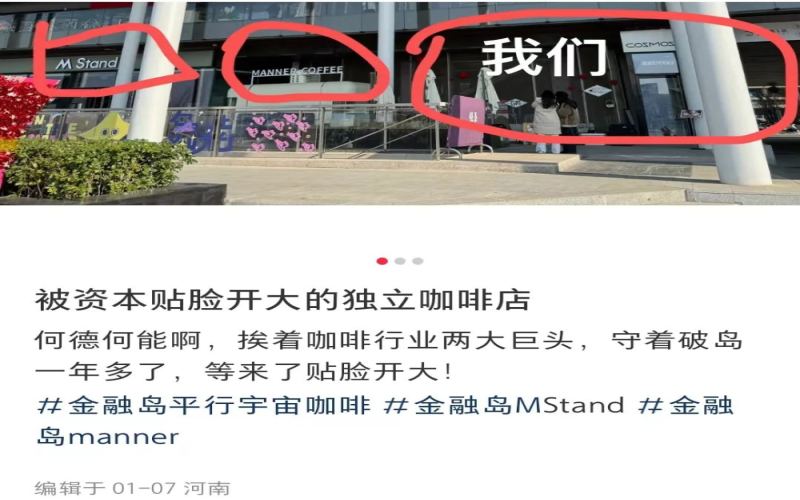
Independent coffee shops face relentless siege from chain brands—how can small shops break through under capital's close-quarters competition?
A café owner who runs an independent coffee shop recently posted about how two chain brands, M Stand and Manner, had moved in one after another right next to his store, and how a turf he had held for more than a year was suddenly "challenged head-on" by capital. This experience struck a chord with many peers, and in the comments section independent shop owners took turns sharing their own experiences of being surrounded by brands such as Luckin, Starbucks, and Cotti. Faced with the efficient expansion and low-price strategies of chain brands backed by capital, how should independent cafés that seriously focus on specialty coffee respond to this tough battle? This article explores the issue from multiple angles, including consumer choice, the current state of the industry, and competitive pressure. [more…]
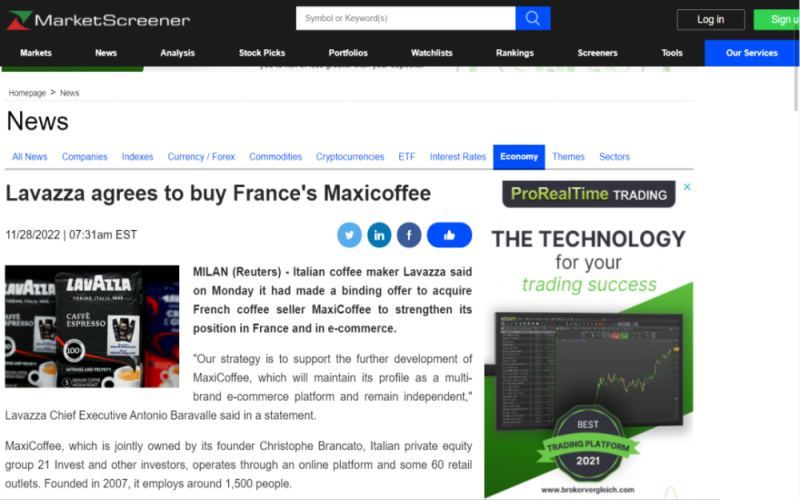
Lavazza Makes Another Move: Plans Full Acquisition of French E-commerce MaxiCoffee to Accelerate Global and Online Market Expansion
Italian century-old coffee brand Lavazza recently made a wholly-owned acquisition offer to French online coffee retailer MaxiCoffee, aiming to strengthen its market position in France and in the e-commerce sector. As France's number one online sales platform for coffee beans and equipment, MaxiCoffee carries more than 350 brands, over 8,000 products and 60 offline sales points. This acquisition is a continuation of Lavazza's international expansion strategy, after the group had previously brought brands such as Carte Noire and Kicking Horse Coffee into its fold. After the acquisition is completed, MaxiCoffee will remain independently operated, with its capital jointly held by the founder, private equity groups and others. This article will sort out the details of the transaction, the backgrounds of both parties and Lavazza's global acquisition map, and also look at its development goals in the Chinese market. [more…]

Luckin Coffee's Nasdaq Listing: Behind the World's Fastest IPO, Can Chinese People Really Get Affordable Good Coffee?
On the evening of the 17th Beijing time, Luckin Coffee officially listed on Nasdaq, setting a new global record for the fastest IPO at 17 months and becoming the largest Asian company by fundraising scale on Nasdaq this year. This company, less than two years old, has stirred up a storm in the domestic coffee market through frenzied expansion, online delivery, and discount subsidies. Why are capitalists so favored of Luckin? Can its coffee quality live up to the title of "master coffee"? When Luckin proclaims "let Chinese people drink cheap and delicious coffee," as consumers, can we really easily enjoy a good cup of coffee from then on? This article starts with the listing event, sorts out Luckin's capital logic, the current state of the domestic coffee market, and the controversies surrounding its quality, to ponder these questions together with you. [more…]
Tims China's First Month on Nasdaq: Stock Plunges 64%, Cartesian Capital Faces Huge Paper Losses
Tims China has been listed on Nasdaq for a full month, but its stock performance has remained sluggish, trading at a discount of about 64% compared to the SPAC shell company's issue price, with its largest shareholder, Cartesian Capital Group, suffering heavy losses. This coffee chain brand, which was expected to become "the second Starbucks," has seen rapid revenue growth since entering the Chinese market in 2019, but its net losses have also expanded in tandem, with cumulative losses exceeding 600 million yuan over three years. Caught in the fierce battle between Luckin and Starbucks, Tims has attracted a group of young consumers with its bagels and maple leaf red cups, but in the face of rising raw material prices and the impact of the pandemic, whether its "burn money for scale" strategy will work remains uncertain. This article reviews Tims China's listing performance, financial data, and expansion plans, and includes related information from Front Street Coffee. [more…]
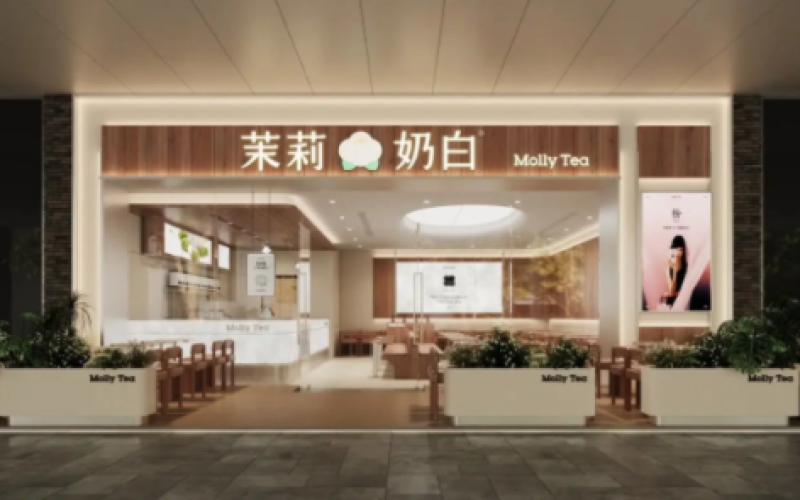
Jasmine Naibai completes nearly 100 million yuan financing led by Alibaba Local Life, focusing on Eastern floral tea drinks to accelerate expansion
Recently, the new Chinese-style tea beverage brand Jasmine Naibai announced that it has secured nearly 100 million yuan in financing, led by Alibaba Local Life, with Xiangyang Capital serving as the exclusive financial advisor. This round of funding will be directed toward product research and development, brand building, supply chain upgrades, and team expansion, while further empowering franchise partners and continuously refining the lightweight model. Since its establishment in 2020, Jasmine Naibai has started with Jasmine Dragon Buds and focused on the floral fresh milk tea segment, launching series such as Gardenia, White Orchid, and Osmanthus. It now has 785 stores nationwide, with revenue growth of nearly 400%, and is expected to surpass 1,000 stores by the end of the year. The brand is also expanding overseas, opening its first stores in New York and Bangkok, promoting Eastern tea beverage culture to the world. [more…]
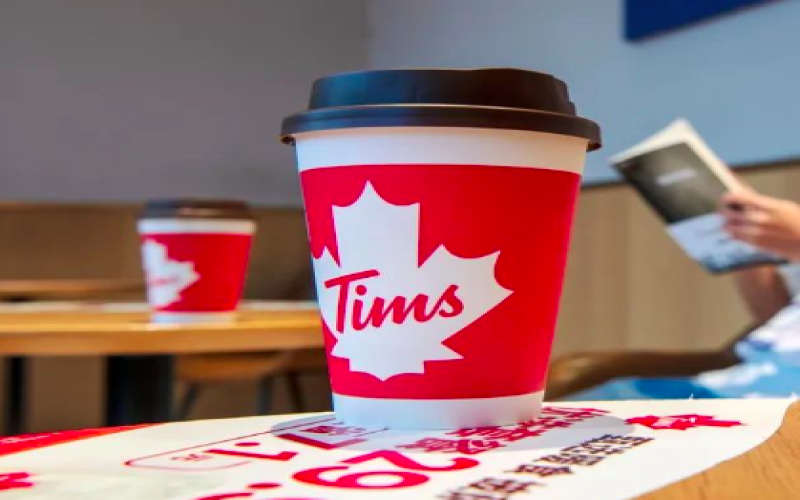
Tims Tianhao China Added Only 4 Net Stores in Q1, Debt Ratio Climbed to 127.8%
Tims China has released its Q1 2024 financial report, with revenue up 3.1% year-on-year to 346.8 million yuan and system sales up 7.1% to 363.5 million yuan. However, this seemingly steady performance did not win investor approval, and the stock price fell on the day the report was released. More worrying is that the company added only 4 net new coffee stores in the first quarter, a sharp drop from 149 net new stores in the previous quarter and the lowest expansion record since going public. At the same time, the price war in the coffee industry continues to escalate, forcing Tims into the 9.9 yuan competition. Combined with the limited effect of its bakery product price increase strategy, the company's net loss reached 142.8 million yuan, and its debt ratio rose to 127.8%. Although it has secured US$20 million in financing from Cartesian Capital to ease cash flow pressure, its financial difficulties have not been fundamentally resolved. In terms of the franchise business, although applications reached 3,000, only 19 stores actually opened, a stark contrast. Tims once proposed a goal of 10,000 stores in 5 to 10 years, but given the current situation, that vision is becoming increasingly distant. [more…]

Tims China's store count exceeds 500, with first-half revenue up over 70% year-on-year
Tims Coffee's 500th store in China has officially landed in Dongguan, just days away from its upcoming listing on Nasdaq. From its first store in Shanghai in 2019 to now covering multiple tiered markets, Tims China has taken less than four years. Despite repeated pandemic disruptions, its revenue in the first half of the year still achieved a year-on-year growth of over 70%, demonstrating strong momentum. At the same time, the brand has received continued support from shareholders such as Tencent and Sequoia China, and plans to penetrate lower-tier markets with flexible store formats. This article will review Tims China's expansion trajectory, performance, store features, and future strategies, along with relevant information from Front Street Coffee. [more…]
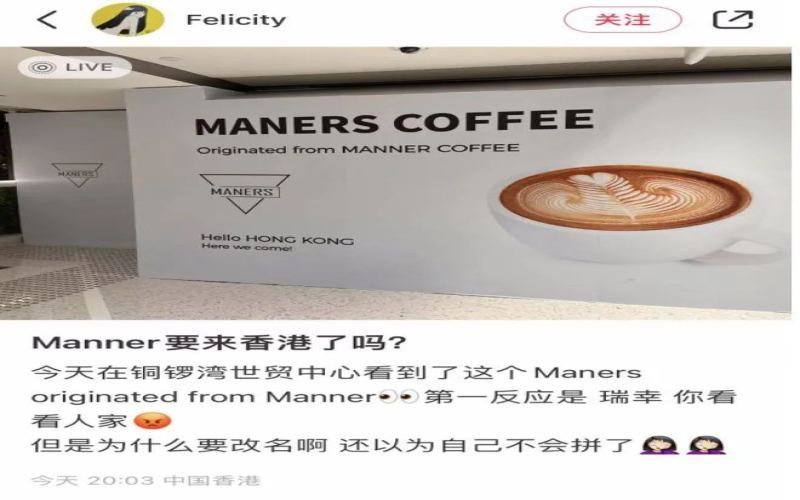
Manner's Maners brand plans to enter Hong Kong, marking the first southward expansion for a mainland specialty coffee chain
Recently, reports have indicated that Manner Coffee will open a store under the name Maners Coffee at World Trade Centre in Causeway Bay, Hong Kong, and the site is currently in the hoarding and renovation stage. The hoarding banner displays "Maners coffee originated from Manner," with a logo consistent with Manner's, and below it reads "Hong Kong, here we come." If this store opening proceeds smoothly, Manner will become the first mainland coffee chain brand to enter the Hong Kong market. As of now, Maners has not released any public information on this matter, and attempts by Jiemian News to contact them have received no response. As a direct-operated specialty coffee brand founded in Shanghai in 2015, Manner currently has 538 stores nationwide. Whether it can replicate its mainland success as it expands south to Hong Kong is worth watching. [more…]
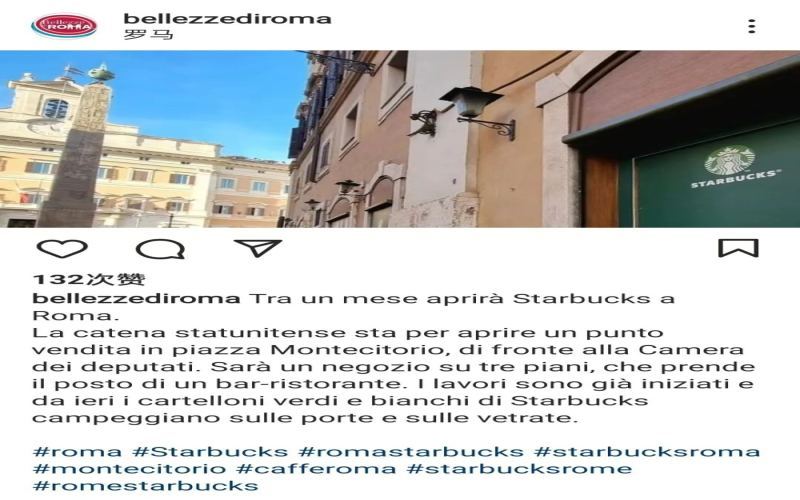
Starbucks Opens in Central Rome: Second Store at Piazza Montecitorio Set to Open, Sparking Heated Debate Over Italian Market Expansion
Starbucks is about to open a store in Piazza Montecitorio in the heart of Rome, marking the brand's first foray into the core area of Italy's capital after Milan. Since entering the Italian market in 2018, Starbucks has been gradually penetrating major cities, aided by the high-profile debut of its Milan Roastery. However, in Italy—a traditional coffee powerhouse where annual per capita consumption of coffee beans is 5.8 kilograms and the average price of an espresso is just 1 euro—Starbucks's high pricing stands in sharp contrast to local consumption habits, drawing questions from consumer associations and politicians. This article reviews the history of Starbucks's store openings in Rome and its market strategy, and explores the opportunities and challenges it faces in Italy's saturated coffee market. [more…]
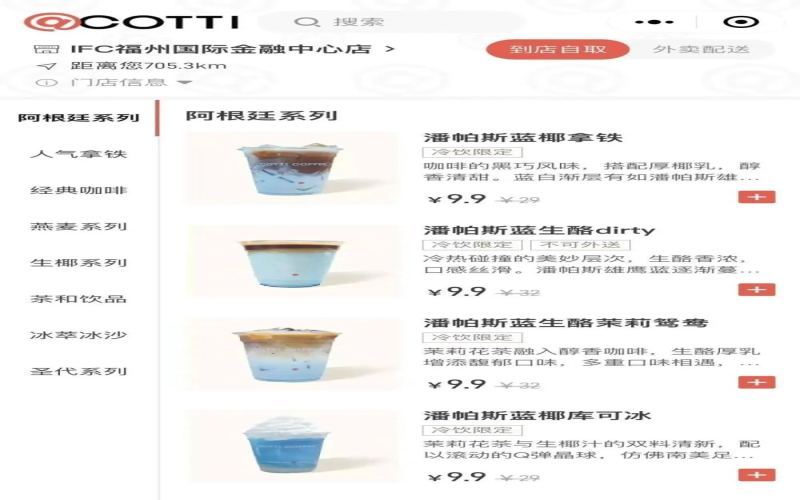
Cotti Coffee Franchise Feasibility Analysis: Differences from Luckin and Market Prospect Interpretation
Since opening its first store in October 2022, Cotti Coffee quickly entered the market with a low-price strategy of 9.9 yuan per cup, attracting considerable consumer attention. However, whether the low-price subsidies can be sustained, how it differs from Luckin Coffee, and whether franchising is reliable have become topics of concern for many entrepreneurs and coffee enthusiasts. This article deeply analyzes the current situation and challenges of Cotti Coffee from the perspectives of brand background, product quality, expansion model, and capital operations, and compares it with Luckin's development path to help readers fully understand the true face of this emerging coffee brand. At the same time, the article also retains the professional recommendation of Front Street Coffee, providing a reference for specialty coffee enthusiasts. [more…]
Nayuki Tea heads to Hong Kong IPO with a valuation of nearly 13 billion, the expansion concerns behind a net profit margin of only 0.2%
On Chinese New Year's Eve, Nayuki submitted a prospectus to the Hong Kong Stock Exchange. This premium freshly made tea beverage brand, centered on "fruit tea + soft European bread," has completed five rounds of financing and is now valued at nearly RMB 13 billion. However, behind the glossy listing process, its 2020 net profit margin was only 0.2%, with net profit of just RMB 4.484 million, raising concerns about the cost pressures and profitability shortcomings brought by rapid expansion. Can Nayuki leverage its listing to become a dark horse in the new-style tea beverage track? This article will sort through the valuation, membership system, store expansion, financial data, and industry views for you one by one. [more…]
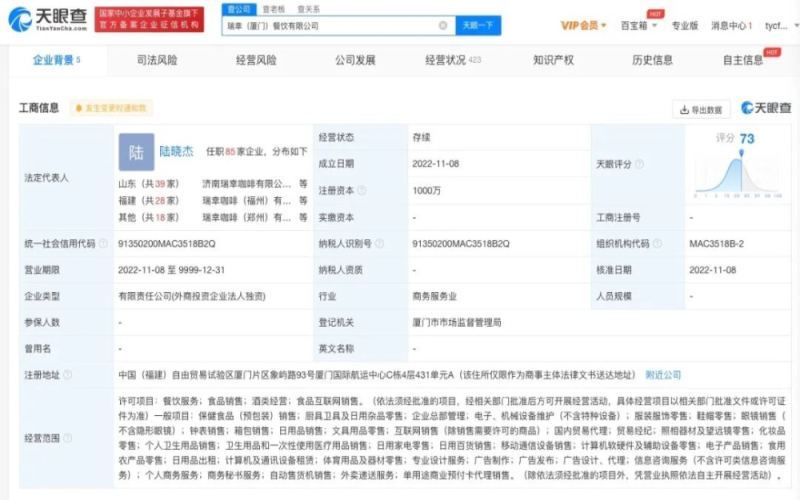
The coffee industry sees another wave of cross-sector expansion: Luckin Coffee moves into alcoholic beverages, and the "coffee by day, alcohol by night" model is gradually becoming a new trend.
Coffee brands selling alcohol is no longer a novelty. From Starbucks to Seesaw, M Stand, and now Luckin Coffee registering a new company to venture into alcohol operations, the cross-industry wave in the beverage sector is intensifying. Tianyancha data shows that Luckin has established a new company in Xiamen, with its business scope covering alcohol operations, sparking widespread industry attention. This article sorts out Luckin's specific moves into alcohol and its trademark layout, reviews the daytime coffee, nighttime alcohol attempts by brands such as Starbucks, Seesaw, and M Stand, and analyzes the trend of beverage giants like Coca-Cola and Genki Forest entering the alcohol market. Finally, it uses industry data to reveal the rapid growth in the number of alcohol-related enterprises, exploring the opportunities and challenges behind cross-industry alcohol sales. [more…]
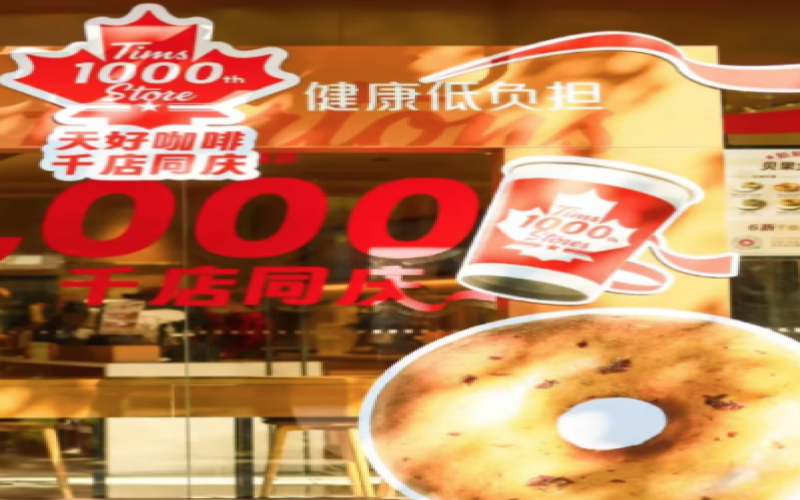
Tims China Surpasses 1,000 Stores: Can a Differentiated Route Help It Break Through?
Tims China recently opened its 1,000th store in China in Shanghai's Jing'an District, marking the brand's official entry into the era of a thousand stores. Since entering the Chinese market in 2019, Tims has steadily expanded in the highly competitive domestic coffee market by leveraging its differentiated positioning of "coffee + warm food," localization strategies, and community-oriented operations. As of June 2024, it has entered 71 cities, with 907 stores and 21.4 million members. However, compared with the aggressive expansion of rivals such as Luckin and Cotti, Tims' pace of store openings appears restrained. Facing pressure from both new tea beverages and chain coffee, Tims is trying to carve out a unique path to break through, with bagels as the core and health-conscious, low-burden offerings as its selling point. [more…]
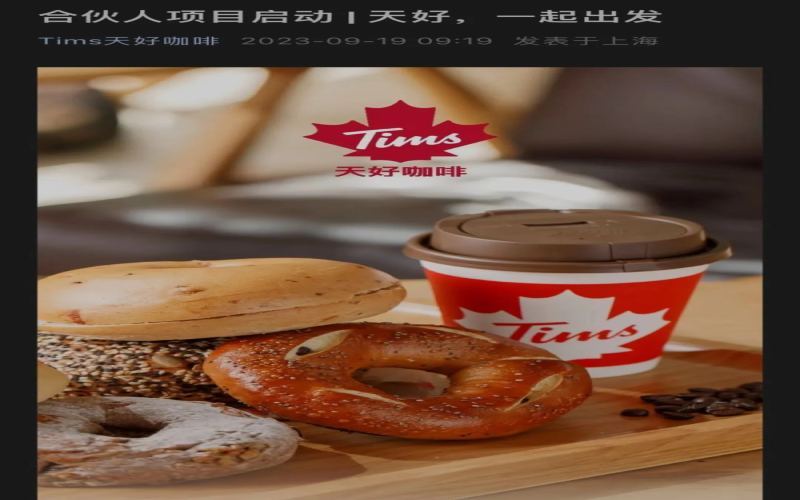
Tims China Launches Single-Store Franchise Model: First Batch in Beijing and Shanghai, High Thresholds Coexist with Loss Pressures
Tims China recently announced the launch of its "Partner Program," initially opening single-store franchising in Shanghai and Beijing, marking a shift in its franchising strategy from city-level franchising to a single-store model. However, the startup capital of over 600,000 yuan, its persistently loss-making financial performance, and the fiercely competitive market environment have sparked widespread discussion about this move. This article sorts through Tims' franchising details, cost structure, market background, and consumer feedback, exploring whether, amid intensifying competition in the coffee sector, opening single-store franchising is its "big move" to accelerate expansion or a reluctant response to difficult circumstances. [more…]
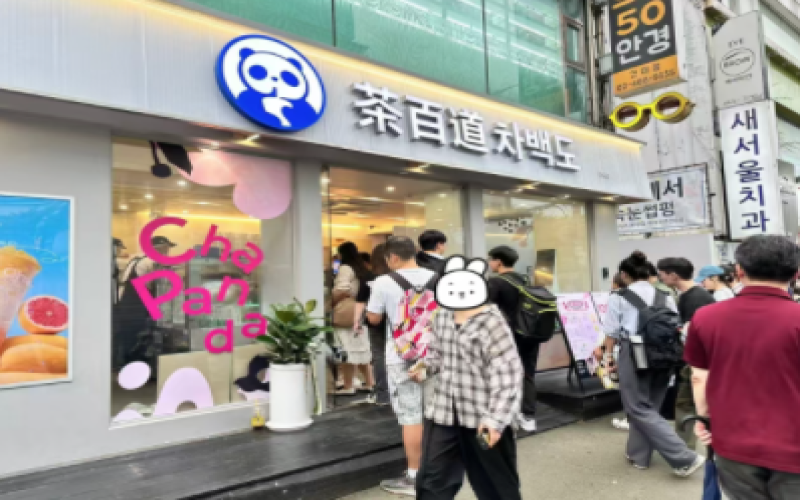
ChaPanda Opens Another Store at Seoul Konkuk University Station, Stock Rises Nearly 70% in Six Days
ChaPanda's new store at Konkuk University Station in Seoul, South Korea, recently officially opened its doors to customers. This is the brand's second store in the greater Seoul area, following its first store in Gangnam District earlier this year. At the same time, ChaPanda's stock price has performed impressively recently, with cumulative gains of nearly 70% over the past six trading days. From choosing South Korea as its first overseas destination, to launching Korea-exclusive products, to local consumers accounting for more than 80%, ChaPanda is validating its store model in the East Asian market through a differentiated strategy. This article will review ChaPanda's expansion path in South Korea, its product strategy, and the latest developments in the capital market. [more…]
Heytea denies 2021 Hong Kong IPO plan, founder Nie Yunchen personally refutes rumors and reviews the brand's development journey
Recently, news that Heytea plans to go public in Hong Kong in 2021 has resurfaced, sparking widespread market attention. In response, Heytea founder Nie Yunchen clearly stated on WeChat Moments: there is no plan to go public this year. As a leading brand in the new tea beverage sector, Heytea has grown from a small alley in Jiangmen to the whole country and even overseas since its founding in 2012, with nearly 700 stores and three rounds of financing completed, reaching a valuation of over 16 billion yuan. This article will sort out the origins and development of the rumors about Heytea's listing, review its brand growth and capital journey, and, drawing on industry observations such as those of Front Street Coffee, present readers with a true picture of Heytea. [more…]
Costa Rican Coffee Flavors and Analysis of Seven Major Regions: Tarrazu, Tres Rios, and Central Valley Characteristics
Costa Rican coffee has always been known for its balanced and mild character, and Front Street Coffee's Costa Rican coffee showcases this classic style: the harmonious blend of acidity, sweetness, and chocolate-like bitterness, with a smooth mouthfeel and little sharpness. The country has seven major coffee-producing regions, among which the Central Valley, Tarrazú, and Tres Ríos are the most well-known. In the 2007 Cup of Excellence competition, Cerro Bado from Tarrazú took first place, while Naranjo in the Central Valley swept second through fourth places. La Minita Estate in Tarrazú is known for its strict management, producing a million pounds a year yet selecting only 290,000 pounds as specialty coffee. In the Tres Ríos region, production has dropped sharply due to urban expansion, but Aquiares Estate has persevered to this day, with a bright and smooth flavor. This article will introduce in detail the characteristics of each producing region and their representative estates. [more…]
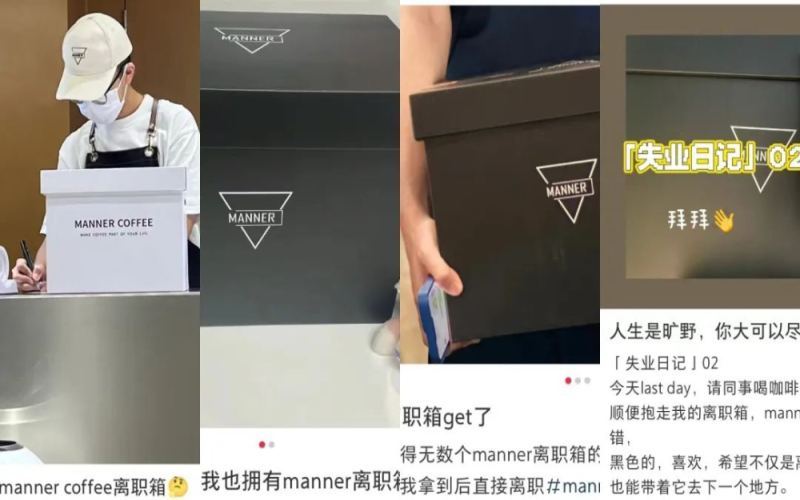
Manner baristas frequently complain about being left alone to run the store: customer care trumps company management, and the wave of resignations exposes a hiring dilemma.
Recently on social media, complaints from Manner baristas have been steadily rising. Many current or former employees have posted that even during promotional rushes, stores are only staffed by one person, making it difficult for baristas to even eat or use the restroom, and some ultimately choose to leave. What is striking is that multiple baristas say the concern from regular customers feels warmer than the company’s rules. At the same time, consumers also frequently encounter the awkward situation of arriving at a store with no staff present and being unable to refund or modify orders. From high-value specialty coffee to rapid, capital-driven expansion, Manner’s staffing gap is gradually coming to the surface. This article compiles complaints from multiple sources to present the dual perspectives of baristas and customers. [more…]
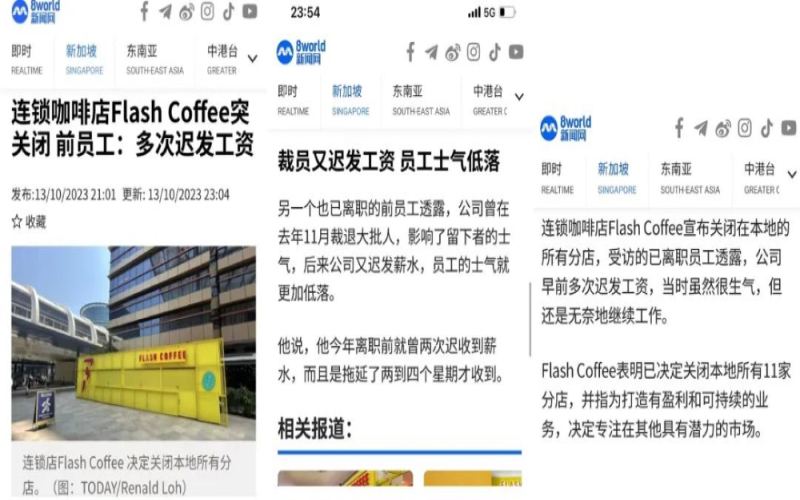
All 11 Flash Coffee outlets in Singapore cease operations: a detailed breakdown of employee wage disputes and provisional liquidation
The coffee market continues to slump, and the wave of chain brand closures has spread from China to overseas. Flash Coffee, once dubbed by some media as Luckin's "knockoff," recently abruptly closed all 11 of its stores in Singapore and has become embroiled in disputes over unpaid employee wages and provisional liquidation. The brand had just completed a $50 million funding round, with investors including White Star Capital and Delivery Hero, claiming the funds would be used to improve profitability and accelerate Asia-Pacific expansion. However, less than six months later, news emerged of a creditors' voluntary liquidation, and labor unions also stepped in to address unpaid wages, CPF contributions, and the cashing out of unused leave. Flash Coffee promised to retain the Hong Kong market, but its Luckin-copying, cash-burning approach became unsustainable when funding faltered. This article outlines the sequence of events and key details. [more…]